

When you eat a bowl of porridge oats or an apple, have you ever thought about who else you’re feeding? It may sound unusual, but every mouthful you take nourishes not just your body but also trillions of tiny organisms that live in your gut. And what do they like to eat? Fibre in food.
What is microbiota in the gut?
Your gut microbiota is a huge group of tiny living things, usually bacteria, that live in your intestines. These microorganisms don’t harm you; in fact, they help you digest food, keep pathogens at bay, control inflammation, and even boost your mood and immune system.
But they can’t live on just anything; they require fibre.
Fibre: A Food for Your Good Bacteria
Dietary fibre can’t be broken down in the stomach or small intestine like sugars and proteins do. Instead, it travels straight to your large intestine (colon). Fermentation happens there, and your gut microorganisms eat it up. Bacteria break down fibre into short-chain fatty acids (SCFAs), which include butyrate, acetate, and propionate. These SCFAs are very important because they give your colon cells energy, decrease inflammation, and help regulate your metabolism [1].
“Dietary fibres change the composition and function of the gut microbiota and are very important for promoting host–microbe mutualism.” [1]
Not all fibre is the same
There are many kinds of fibre:
- Soluble fibre, which is found in oats, lentils, and apples, forms a gel-like material that bacteria can readily break down.
- Insoluble fibre, which is found in whole grains, nuts, and vegetables, adds bulk to stools and helps keep things regular.
- Resistant starch is found in cooked and cooled potatoes and green bananas. It acts like soluble fibre and helps good gut bacteria like Bifidobacterium and Akkermansia grow [2].
Different types of fibre feed different types of microorganisms, so it’s important to have a variety.
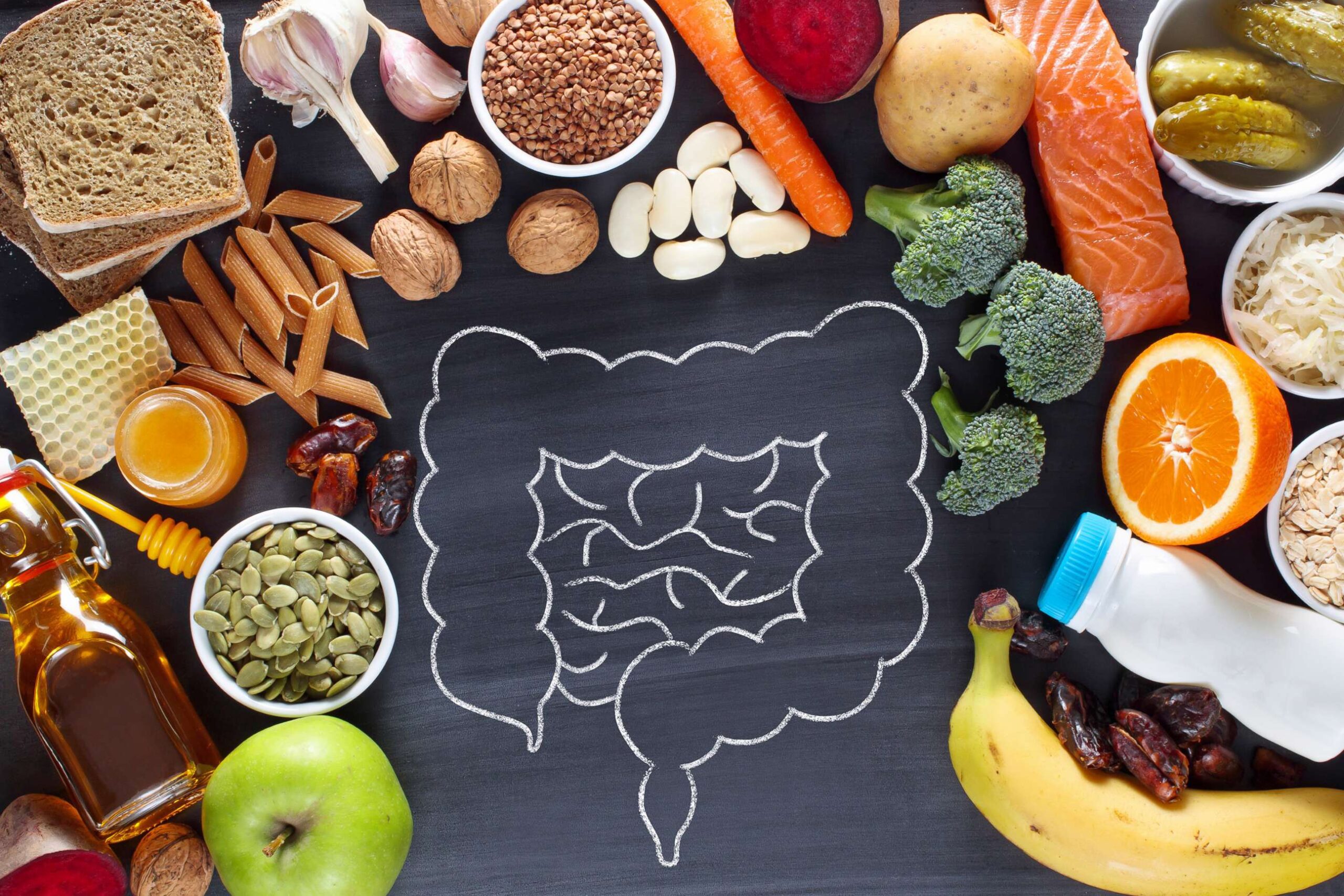
The Link Between the Microbiome and Diet
Research shows that those who eat a lot of fibre and plant-based foods have a more diverse and resilient gut microbiota. This type lowers the chances of developing type 2 diabetes, obesity, and illnesses related to inflammation [1][3]. One study using microbial metabolic modelling indicated that certain fibres improve beneficial pathways in the gut microbiota, which may even help prevent chronic diseases [1].
“Carbohydrates that the gut microbiota can access, especially resistant starch, change the way microbes work and can reduce inflammation and metabolic problems.” [2]
The health of your gut and your mind
The gut microbiota doesn’t simply help with digestion; it also communicates with your brain through the gut-brain axis. Fibre fermentation produces SCFAs, which aid this communication. Studies show that dietary fibre may help keep the intestinal barrier intact, reduce endotoxemia, and lower inflammation throughout the body [4].
“A diet low in fibre alters the gut microbiota and may increase intestinal permeability, allowing harmful substances into the bloodstream and affecting brain function.” [4]
Fibre intake in the UK and guidelines
However, in the UK, fibre intake is significantly below recommended levels. The NHS recommends adults aim for 30 grams of fibre a day [5], yet many adults consume only around 18 grams daily on average.
Useful tips for feeding your microbiome
- Add more plants to every meal.
- Try to eat at least 30 different plant-based foods each week.
- Include both soluble and insoluble fibres in your diet.
- Fermented foods like natural yoghurt, kefir, kimchi, and sauerkraut are beneficial.
- Choose wholegrain breads, cereals, and pasta instead of refined versions.
Last thoughts
Fibre is what your gut flora eats, and it has a big impact on your overall health. By feeding these tiny friends a diet rich in fibre and variety, you’re investing in your long-term wellbeing.
If you’re unsure where to start or how to manage gastrointestinal symptoms like bloating or IBS while increasing your fibre intake, our online dietitians can help. We’ll support you to create a personalised plan suited to your gut health.
Want to improve your gut health naturally?
Call us today to book a one-to-one consultation with a qualified dietitian. Let’s make your gut-friendly dish one mouthful at a time!
REFERENCES
[1] Heinken, A., & Thiele, I. (2022). Systematic prediction of health-relevant human-microbial co-metabolism through a computational framework. Postharvest Biology and Technology, 186, 111835. https://doi.org/10.1016/j.postharvbio.2021.111835
[2] Zhao, L., Zhang, C., Fukuda, S., et al. (2014). Gut bacteria selectively promoted by dietary fibres alleviate type 2 diabetes. Science, 359(6380), 1151–1156. https://doi.org/10.1016/j.jmb.2014.06.021
[3] Moles, L., Gómez, M., Hevia, A., et al. (2022). Human microbiota and the influence of fibre. The American Journal of Medicine, 135(10), 1234–1243. https://doi.org/10.1016/j.amjmed.2022.04.003
[4] Singh, R.K., Chang, H.W., Yan, D., et al. (2020). Influence of diet on the gut microbiome and implications for human health. Microorganisms, 10(12), 2507. https://doi.org/10.3390/microorganisms10122507
[5] NHS. (n.d.) Fibre – Eatwell Guide. https://www.nhs.uk/live-well/eat-well/how-to-get-more-fibre-into-your-diet/